Showing posts with label Finance. Show all posts

Wednesday, January 6, 2021

2020-2021 马来西亚最好的行用卡

现金返现比积分好,每月直接扣除,不怕过期,而对换分数每年都会提高, 积分只会越来越不值钱。

暂时低门槛申请又不需每月高花费的现金返现卡就只有以下 (个人排名):


1. Affin Duo (双卡) << 每月消费多于 RM2500 首选

• 3% 如每月消费达 RM 2666 ,Visa卡有最高现金返现 RM80, Master卡积分换现金券也大概 0.49% 。 X 汽油


2. Public Bank Visa Signature << 要申请第二张卡后备

• 6% 现金返 ,最高现金返现 RM38。 申请要求比较高,超快达到最高现金返现,要有第二张卡后备。X 汽油


3. PB Quantum (双卡) << 每月小费少于 RM1200 首选

• 5% 现金返 (Master = online transaction, Visa = waive) 每张现只有 RM30 共 RM60。每月每张卡消费达 RM 600 一下就达表了。 X 汽油


4A. HLB Wise << 单卡首选

•  1%~8%周末现金返,分类别消费(汽油/用餐/杂货),每个类别最高现金返现 RM18。 其它类别回扣 0.25% 没最高现金返现界限!就有高年费 RM98~~~


4B. Citi Cash Back << 新人优惠多,要申请第二张卡后备

• 10% 类别消费,最高现金返现才RM10每个类别。其它类别回扣 0.2%,三年后超高年费 RM120!


4C. UOB One Visa Classic << 高汽油消费首选

• 5%周末(汽油/杂货),没最高现金返现界限!其它类别回扣 0.2%


5. Standard Chartered Smart Credit Card << 6个月后就可取消

• 30% 只有首6个月,T&C 蛮多。不嫌麻烦就ok X 汽油


6. MBB 2 Cards (双卡) << 只在周末才会用到又要汽油回扣* 如条件允许Maybank Visa Signature 会比较好的选择

• 5% Amex 每月消费达 RM 1000 现金返现RM50, 不过就一定要周末才有,还是很多地方不收 Amex!它的另一张卡Master更本就是垃圾卡,毫无用处。


很多高回扣的卡都要有一定消费才会得到,而且回扣又有额度限制,你自己去计算就会知道真正的回扣才那么一点点,有些连0.1%都没,比积分还烂。

Friday, November 20, 2020

网购付款前可上网检查 Check Scammers CCID


 根据武吉安曼商业罪案调查部总监拿督再努丁接受马新社访问时指出,从去年截止今年2020年10月份,国内有超过8万个银行户头,遭警方鉴定为被不法集团用来进行诈骗活动的户头!

根据当局资料显示,从去年至今,超过8万个遭不法集团滥用来进行诈骗活动的“钱驴”户头。

因此,在去年2019年共有1万8130个银行户头因涉及诈骗活动被冻结,今年截止10月份则有1万6429个银行户头被冻结。

不法集团通常会在社交媒体上刊登商业广告,以200令吉至2000令吉的价格租借钱驴银行户头及提款卡。而民众因眼前利益,将本身的个人银行户头及提款卡,贩卖或租借予不法集团,间接协助不法集团进行诈骗活动。


在去年2019年共有6409人因借出银行户头给不法集团使用而被提控上庭,而今年截至10月,则有3176人因犯下同样错误被提控上庭。

有鉴于此,全国商业罪案调查部之前已经设立了一个搜寻引擎网页,供民众查询银行户头号码是否涉及罪案,避免坠入诈骗陷阱。

这个网站旨在供民众查询涉及网络诈骗案或任何被投报的银行户头,以免民众在进行电子交易时受骗。


民众在汇款给予对方之前,记得先上网查看一下,输入对方的银行户口号码或者电话号码,点击查询,看看对方之前是否有涉及任何的诈骗案件。

网站:https://ccid.rmp.gov.my/semakmule/


另外,如今警方也对此推出了手机APP,让用户更容易可以通过手机APP 去查询。

Check Scammers CCID : https://play.google.com/store/apps/details?id=com.ccid.ccis2020


不过还是提醒你,就算对方没有被列入这个名单之内,也不代表对方不是诈骗分子,或者只是没有被举报罢了。

Wednesday, November 11, 2020

存钱那么困难吗?教你从0存款,存到第一桶金!

你是不是每当你开始有一些存款,就会被一些突如其来的事情把辛苦存下来的钱给花光,

存钱那么困难吗?一切需要从新开始?

其实一切没有你想得那么悲观,你只是缺乏一个完整的存钱系统,以下会教你存钱的方法,每一种方法适用于不同的存钱目的。


六个罐子存钱法


六个罐子存钱法,顾名思义就是需要准备六个罐子?!
其实你不需要拿出六个罐子存钱,也不需要特地开六个银行账户。
只需要使用APP 里的虚拟账户,清楚的记录和分配这些钱到不同的账户。
存放的钱可以是实体(准备存钱筒),还是虚拟的(转到其他银行账户)。


财务自由账户   
就是当你达成目的的时候,可以对你不喜欢的工作说再见!!

如何达到财务自由并提早退休,可以参考这篇文章:如何利用4%法则,达到提早退休


教育账户 
- 人需要不断地学习新的知识,新的机会才会为你开启,生活才有可能改变,然后往你理想的样子前进。应该想看如何投资自己的脑袋咯。


生活必需账户
- 主要开销的账户,包括:房租、水电费、伙食费、保险费、车油费和生活用品开销。尽可能把这个账户缩到最低,避免不需要的开销。

可以到这里看如何控制支出:所有支出由我掌控!


玩乐账户
- 奖励机制,奖励自己的小成就。记得我们应该常常去关心自己的心灵,这样不但可以让自己持续坚持的做下去,还可以让自己开心!


长期储蓄账户
- 用来实现你的梦想,把梦想当成你的存钱目的,把你的存钱目标替这个账户取个名字吧!


赠予账户
- 父母的孝亲费,乐捐给慈善机构,帮助社会,和回馈社会,


因为以上这些费用都有一个特征,就是没有一个说得准的金额,所以有了这个账户就可以更容易自己评估应该支出多少。

知道了每个罐子的功能,我们就来分配自己的薪资到这六个罐子来。应该如何分配呢?

那我先举个例,如果你的薪资是RM3,000

财务自由账户

10%

RM 300

教育账户

10%

RM 300

生活必需账户

55%

RM 1,650

乐账户

10%

RM 300

长期储蓄账户

10%

RM 300

赠予账户

5%

RM 150


我建议财务自由账户和生活必需账户,可以分开成独立的账户,对你肯定有帮助。
财务自由账户 - 这里的钱只进不出,因为这是你未来退休才能动用的资金。
生活必需账户 - 则是经常进进出出的账户,所以直接留在你的薪资账户就可以了。


如果你是看了六个罐子存钱法,觉得太复杂,这里有个极简易的版本。

只需要两个账户,薪资账户 和 存钱账户


你所需要做的就是每次薪水到手时,就把一部分的钱转到存钱账户。

你需要先给付自己,才来处理其他支出。

每个月先把钱转到了存钱账户,薪资账户你花光了也无所谓,因为你已经存了一笔。

小提示
存钱账户的卡不要带出门,以免自己缺钱的时候,又打存钱账户的主意。

薪资 = 存钱 + 支出

想要存到钱,就得先存钱,才来想支出。


52周存钱法

52周阶梯存钱法是我认为蛮实用的一种存钱方法,

第1周存1块钱,然后每一周增加另一块钱。在52周后就可以存下RM1,378。

这方法非常适合用来存旅游基金,尤其想要计划在东南亚地区旅游的人,用这一套存钱法隔一年就可以出发了。

我本身已经实践过了,效果很好,每星期准时将钱投在存钱筒,然后画掉这周的号码。超有成就感的!

下面有制作的图表,可以免费点击下载哦!


进阶:365天存钱法

跟52周存钱法一样,第一天1块,第二天2块,。。。

直到365天,你总共可以存到RM66,795

当然这一般人做不到,所以我们可以调低标准,从10sen开始,可以让零钱也参与,这样一年下来可以存到 RM6,679.50!

这难度其实有点高,如果你想要挑战,就去试试看吧。


零钱存钱法

有时候,这些零钱就会到处乱放,不然钱包就会很沉重。把这些零钱转化为你存钱的理由吧!

把每天带回来的零钱投到存钱筒里,把它当成是个每日任务,让零钱响起来,才算是完成任务。

请别小看零钱的威力,你会发现自己的这么一个举动可以存到的金额。

远远超过自己预期的!


小提示
把存钱筒放到门口,或者是显眼的地方,一进门就可以把零钱投入存钱筒最好。


如何让存钱更有效率呢?


我这里有3个小方法提供给你,

记账

记录你的每日开销持续一个月,过后回顾一下自己在哪方面的支出过大。

很多时候,你会惊讶自己在某方面的开销怎么会这么大,平时没在记录和回顾是不可能发现的。

记账的好处就是了解你的每月支出是多少,找出没必要的支出并且改进,方便你日后做预算和分配账户。

推荐APP: CW Money

本身正在使用的APP,方便随时记账外,还可以建立虚拟账户,方便你回顾剩余的余额。
(使用六个罐子存钱法建议开此工具)

想了解如何使用这个APP记账,可以到这里看看哦 记账


多用现金,少刷卡

刷卡会有一种出钱无痛痒的感觉,所以多使用现金,重新感受荷包逐渐变薄的感受吧,有效提醒你不要乱花钱!


网购- 东西放在购物车多几天

建议你先把看中的东西放在购物车,过了几天再来看自己到底还想不想要,想要就买,不想要就取消,才不会看到什么便宜就买什么,不然很容易被商家的广告和即时的折扣冲昏了头

最后,后悔买了这么多没有用的东西。


总结

存钱,是为了去过喜欢的人生。

非常喜欢艾尔文的短文,有幸和你分享


你有可能已经经历过那种突如其来的意外,把你的一切扫空,你也或许没有经历过。

因为我们无法预测这种不定时的情况何时会来,所以存钱,存个安定,也存个未来,一个美好、理想的未来。

以上这么多存钱的选择,请选一个就好,然后严格执行。

你会发现存钱的乐趣,和财富累积的成就感。

Wednesday, January 4, 2017

最新拥有 VisaWave 这logo的银行卡其实是「大陷阱」!赶快关掉这功能!

2017年了,所有人都应该换了最新的银行卡(Debit Card)和信用卡(Credit Card)对吗?但大家有没有留意到卡上面多了几个 logo,尤其是这个像声波的波纹标志?


这是神马?没错,这就是现在全球大力推广的「无接触式支付系统」CPS(Contactless payment systems),包括 Visa 的 PayWave,MasterCard 的 PayPass 和 American Express 的 ExpressPay,基本上功能都是一模一样的,只是不一样公司而已。

▼那这有什么用处呢?用处可就大了,这系统能够让消费者在指定商家付款时,只需掏出你的银行卡或信用卡,在柜台的读卡机上轻轻一 scan,付款瞬间完成,听起来是不是超屌超方便的?

▼但大家知不知道其实这里面还有一个潜在功能?就是当你使用无接触式来支付 RM1,000 或以下时,你是不需要提供任何密码和签名的!看好不是 RM25,是 RM1,000!

大家听出问题了吗?没错,这代表如果你的卡落在别人手中,在你完全不知情的情况下他也能用这方法来成功付款!

超危险的对不对?!你去换卡的时候银行有告诉你吗?很肯定很多人都没有咯,大马的银行素质大家抖动的。而现在还有一个最大的问题就是这功能是默认的,当卡一送到你手中这功能就已经可以开始使用了!

▼在大马很多地方已经支持这种付款方式了:
  • AEON BiG
  • AEON MaxValu
  • AEON Stores
  • AEON Wellness
  • Ben’s Independent Grocer
  • Borders
  • Chatime
  • Golden Screen Cinemas
  • HERO
  • Jaya Grocer
  • KLIA Ekspres 12. Krispy Kreme
  • Krispy Kreme
  • McDonald’s
  • MYDIN
  • NSK
  • RadioShack
  • SOGO Kuala Lumpur
  • Starbucks
  • TGV Cinemas
  • The Coffee Bean & Tea Leaf
  • Village Grocer

如果你家里有佣人,想象一下你的卡被她拿了的话…月尾你就够力了!

▼但是大家别慌,也别去骂银行,因为骂也没用。现在这里就教大家怎么关闭这超不安全的功能!(这里以 Maybank 卡为例子,其他银行方法大同小异。)

1. 到 ATM 机放入卡后选择「OTHER TRANSACTION」

▼选择「CHANGE LIMIT / LANGUAGE / MAYBANK ONE」

▼选择「PURCHASE LIMIT」

▼点选「NO PURCHASE」,然后输入你的 IC 号码就可以了。

这样子就完成了,才4个步骤,是不是超简单的?!

关闭过后就不需要再担心银行卡和信用卡被人偷偷盗用了,不过同时你这张卡也不能用来购物了。赶快把这方法分享出去给家人朋友知道吧!

Saturday, April 12, 2014

2014年04月11日 - 钱途屋语:买房要准备多少钱?

标价多少算是可负担房屋?在目前市场价位上扬幅度快速的情况,已经不容易定义。

根据政府为可负担房屋推出的各种计划,可见目前比较能接受的价位是40万令吉。

即使如此,你会发现,这个价位的房子已是买少见少了。

如何为可负担房屋定义是一个问题,但购房门槛相信是更多人关切想知道的。

可能你很难相信,大约在4到5年前,是有可能以20万令吉左右,在一些热门的城市地点如吉隆玻、八打灵再也、新山或槟城,购买一间不错并不小的公寓,而且这很普遍。

在2010至2012年间,政府将可负担房产定价在约22万令吉。

这可从2011年财政预算案中宣布的“我的第一间房屋计划”(SRP)中印证,因为政府当时将这项计划的住宅顶价定在22万令吉。

但当来到2012年底时,这个价位的房子已经很难找到了。

首间房屋计划顶价40万

首购族开始发现,他们无法承担房产的市价。

观察到这个变化,政府去年将“我的第一间房屋计划”的顶价设在40万令吉。

这转变由多个因素导致;一边厢,低收入群对这可负担房屋40万令吉的标价发笑,因为那根本是他们无法承担的价位,而另一边厢,城市的年轻首购族发现如今很难再找到这价位的房子。

不管政府如何努力为“可负担”这个词来标价,其实都应依照个人的情况而定。

今天对你来说是可负担的,但却无法提供你相对于5年前可负担价位的同等生活质量。

不管你如何定义可负担,要探索入场的门槛有多高,即你需准备多少现金才能购房,让我们从10万令吉至60万令吉的房价对比,就能一探究竟。


须准备头期钱律师费等 首购族享优惠
首先,我们要看看买房的成本,尤其是房产价格和下订时需准备的现金对比。

一般来说,购买房子时必须准备屋价的10%为头期,之后就是律师费和印花税等费用。

从上表屋价和进场成本的对比,看来趋势并不令人鼓舞。

但假如你是首购族,你还有几个减轻负担的方法或项目可考虑:1.购买40万令吉以下房产,买卖合约的印花税减50%2.申请“我的第一间房屋计划”,购买合资格的房屋价格(40万令吉以下的房产),以便可获得100%贷款,意思是不必付屋价10%头期。


须考虑贷款能力
即使你拿得出头期钱和下订时需缴的费用,你还需要符合银行设定的资格来申请按揭式的房屋贷款。

当你考虑房贷的承担能力时,有2个方面必须仔细考虑。

首先,在银行批发贷款前,你的收入必须符合银行的最低要求;其二,即使你符合资格,还要计算你的收入缴付房贷供期后所剩多少,是否足够的资金过生活?这是最切身和实际的问题。

假如这2个问题,其中一项答案是“不”的话,还要继续买房便是不智的决定了。


上表中,我们根据目前的利率、房贷款额和供期等数据,计算出申请房贷所需的最低家庭收入统计。

这只是最基本的统计数据,因为这还未纳入你可能正肩负的其他财务责任。

总结
善用免费谘询服务 掌握可承担房贷价
尽管每个人的财务状况可能都不同,但购房所需的成本与屋价基本上是相符的。
要确认自己有能力与否,必须对比你的个人财务和所需成本。
不管你是不是首购族,申请房贷和购屋时,请谨记善用Loanstreet的免费网上资讯和谘询服务。你也可以在Loanstreet网站使用房贷计算器,掌握自己可承担的房贷与屋价等资讯

Thursday, January 30, 2014

Teaching a Debt Perspective to 12-Year-Olds

A few weeks ago, my buddy and former HBS classmate, Allan, asked me if I’d like to give a talk about my debt pay-off to the youth group that he leads at his church. I was intrigued and asked who the audience would be. “About a dozen young men, ages 12 to 18.” I became both very interested and very intimidated at the same time. What a great time to talk to them about debt! Young people should hear this message sooner rather than later. But also, what a difficult time to talk to them about debt! Will they listen and pay attention? Can they relate? How the heck do I effectively talk to them about debt without getting too simplistic and general?

Well, I literally just got back from giving the talk, and I couldn’t be happier with how it went. The group of guys was extremely engaged and super sharp. They asked a bunch of really good questions at the end, and it felt like they really understood the very complex message that I was trying to express to them. One of them was even jotting down some notes during my talk and came up to me afterwards to ask for some advice. I think I’ve planted a seed with some of them and I’m glad I  took Allan up on his offer.

What follows are the slides and the script that I loosely followed.
Slide1
This is one of those adult topics. This is one of those “how the world works” topics. When I was growing up, I always wanted to know how the world worked. Allan wants to make sure you’re exposed to this kind of thinking. He wants to make sure you know how the world works. Today you’re going to get one of those rare glimpse into how the world works and we’re  going to talk about a very adult topic: money. 
Slide2
What is perspective? Perspective is like a point of view. When you were a one-year-old, you had the point of view of a one-year-old. You only cared about your naps and eating and having a clean diaper. You weren’t really interested in current events, or international news, or anything like that.  A dog has the point of view of a dog. It only cares about naps and eating and and playing.

Your current perspective as 12 to 18-year-olds is much different than the one you had when you were one. It’s the result of what you experience, read, see on TV, hear about from your parents and teachers. It changes as you go through life.  Today, I want to try to change your perspective and get you to think about certain things a little differently.

Slide3
You already know this is a fact. This is not the secret. How do you know that success is important in our society? One way to answer that question is to ask yourself what you get pressured to do well on. Grades? Sports? Every time your parents ask you how you did on a test, they’re asking if you were successful.Why? Because success is important. Every time your parents cheer for you while you’re playing a sport, they’re cheering for your success because success is important.

Every time your parents ask about your performance, they’re asking about your success, and they’re sending you a signal that success is important.

Slide4
We automatically consider somebody successful if they have a lot of cool stuff.
Slide5
Something that we do automatically is something we do without thinking. A perspective is automatic. We take our experiences and what we hear from our parents and see in advertising and in TV shows and movies and we start making snap/automatic judgments about people.

Slide6
Here’s an advertisement for a very expensive watch. This advertisement helps shape your perspective that somebody is successful if they have a lot of cool stuff.

This advertisement is saying: Eli Manning is a very successful football player and he wears a Citizen watch. Are you successful like Eli? Then you can wear this watch, too. Buy this watch.

Citizen couldn’t care less about whether you are or are not successful enough for this watch. They just want you to want this watch, and they use Eli Manning to make it attractive.

These kinds of advertisements that associate successful people and cool stuff are all over the place. We’re constantly being bombarded by them. Seeing so many of them makes you think that a person is successful if they have cool stuff; it shapes your perspective.

Slide7
Let’s pretend these two guys are twins. We’ll call them Bob and Ted. Who has his life under control? Who has all the answers? Who’s the more successful one? Let’s say they’re both friends of your father and they come to the house from time to time, or you see them at church. Who would you want to get homework help from? Who would you want as a coach? As a teacher?

Slide8

So the perspective that most people have about success is that being in possession of a lot of cool stuff means the owner of those things is successful.

Another common perspective most people have is that a lot of cool stuff will make us happy.
Slide9
Why do we think that? Here’s an advertisement for a gaming system that helps shape your perspective that people are happy if they have a lot of cool stuff.

This advertisement is saying: These kid are happy because they’re playing WiiSports. Do you want to be happy? Then you should buy WiiSports.

These kinds of advertisements that show happy people enjoying something that a company is trying to sell you are all over the place. Seeing so many of them makes you think that cool stuff really will make you happy.

Slide10
Ok, so thanks to what we hear from adults and see on TV and in advertising, we have a very basic perspective: Being successful, which is extremely important, will lead to cool stuff, which will lead to happiness.

Is there anybody who disagrees with the logic of this statement? It sounds pretty reasonable, doesn’t it?

Slide11

Now, let’s say everybody in this room is an adult. You’re 18 years old. You’re not successful yet and, just like everybody else, you want to be happy. You also want to show people that you’re successful—you want to give off that vibe, have that image. But you don’t have any money. What do you do?
Slide12

Well, you can borrow money to buy cool stuff.
Slide13
Is it difficult to borrow money? Not at all. Banks love to lend people money. You don’t have to pay it back quickly. Banks accept repayment over a period of months and even years. There are lots of different ways to borrow money. Has anybody ever borrowed money from their mom or dad? It’s kind of like that… 


Slide14
When I was 26, I wanted to appear successful, and I wanted to be happy. So I went out and bought a house, furniture for the house, a couple of cars, and a motorcycle. Did I look successful?
Slide15
I owed the bank $90k, and that wasn’t even including my mortgage. I created a façade that I was successful. I fooled you. You had this perspective that I was successful, but I owed a ton of money to the bank. I hadn’t actually done anything to deserve those things. I didn’t pay for them with my own money.


Slide16
Which of these guys is successful? Bob, who owes the bank $1M to pay for his stuff? Or Ted, who has his house and car paid off and has $500k in the bank?

Society—advertising, what we see in the movies, on tv, etc.—has trained you to automatically perceive that anybody with cool stuff is successful, when in reality, they might be trapped under a mountain of debt.


Slide17
Here’s a broader question. Why are we defining success so narrowly? Because it’s what we’ve been taught. We’re supposed to get good jobs and be really good at them and accumulate a lot of stuff and be happy.
Do you know what’s interesting? There’s a group called Alcoholics Anonymous designed to help alcoholics recover from their alcohol addiction. There’s a recovery group for almost every single type of addict. But there’s not a recovery group for wealth addicts, people whose every thought is consumed by the need to get richer and richer. Why not? Because our society embraces that kind of addiction. We think it’s a positive thing. So people who are literally suffering from this affliction are being lauded and praised by our society for their gumption rather than being treated for their sickness.

Let’s teach ourselves something different. If we were to put as much work into making a positive difference in this world as we do accumulating cool stuff, what kind of a world do you think we would live in?
How do you perceive success?

Slide18
Which twin do you think is actually happier? Bob, who’s basically living paycheck-to-paycheck to pay for his huge mansion and fancy car? He knows that if he loses his job, he will lose his house and his car. Do you think he sleeps easy at night? Or is Ted the happier one? He could quit his job tomorrow and go on a summer vacation for five years and enjoy his freedom.

Slide19
Here’s a broader question: How do you define happiness? Studies have shown that lottery winners will experience elation when they win the lottery, but they’ll eventually return to their original state. Think back to this past Christmas about a month ago. You were probably super excited to open your presents.

Remembered how happy you were to play with or use your gifts for the first time? Where are those gifts now? Are you as happy using them now as you were the first time?

No material thing can ever bring somebody a lifetime of happiness.

How do you perceive happiness?

Slide20
The answer is no. Moving from a house into an apartment was awesome. For a month. Then I got used to it. Driving that convertible was awesome for a couple of weeks, then I got used to it. Same goes for the bike. I bought these things thinking they would make me a happier person, and they did temporarily, but never permanently.

Slide21

The truth is that money doesn’t really buy happiness. And borrowing money to buy things for happiness…?


Slide22
That will make you absolutely miserable. Owing money to the bank truly is a prison sentence. You don’t have as many options when you owe money to the bank. If you don’t pay the bank the money you owe it, they will take away your stuff. And when they run out of stuff to take, they’ll take most of your paycheck and give you whatever’s left over.

I realized I had limited options when I owed the bank  $90,000. I felt trapped. I had this tremendous IOU. It felt like I had limited options. If I lost my job, I would be in big trouble until I found another one. I was living to work, but I wanted to be working to live.

Slide23
So I had this epiphany, this breakthrough. My perspectives on success and happiness changed. I decided I didn’t care if people thought I was successful or not. I decided I wouldn’t expect cool stuff to make me happy. I sold off the extra car and the motorcycle. I shared my house. I stopped spending money on stuff for seven straight months. I decided to create my own happiness.
Slide24
A Level 1 perspective is extremely basic.


Slide25
A Level 2 perspective is slightly more advanced in that it acknowledges that actual real success is necessary to owning stuff free and clear, without any burdensome debt.


Slide26
A Level 3 perspective is even more advanced because it shows that hard work is a critical ingredient for success which will lead to cool stuff.


Slide27

A Level 4 perspective goes one step further and shows that owning cool stuff doesn’t lead to happiness. We’re responsible for our own happiness.


Slide28

A Level 5 perspective is the most advanced perspective. Hard work leads to success, but not necessarily financial or career success, but success that you define on your own terms. It also doesn’t advocate for “cool stuff,” but normal stuff because cool stuff shouldn’t be the end game, the motivator.
The five rules of a level 5 perspective are:
  1. Love yourself. Don’t measure your self-worth based on what you own.
  2. Create your own happiness. Don’t expect stuff to make you happy.
  3. Say no to IOUs. Live within your means. Don’t borrow money to buy cool stuff.
  4. Be free. Save money for an emergency fund and retirement.
  5. Have an impact. Define success on your own terms.
Slide29
Jose Mujica is a level 5 leader. This is a man who could have a mansion and 42 servants. Instead he has a small house and a dog. He doesn’t care if he looks unsuccessful in the eyes of society. He knows that the mansion and servants won’t make him happy.

Most people we know probably don’t look up to Jose.

Is there anybody who doesn’t think Jose looks happy? I actually think he looks very  content, which is even better than happy. 

Slide30
I’ve shared my perspective with people on my blog. Here are some emails I’ve received from visitors that I thought you might find interesting.

source: http://nomoreharvarddebt.com/2014/01/29/teaching-a-debt-perspective-to-12-year-olds/

Monday, December 9, 2013

Highlight Middle-class pain

KUALA LUMPUR: Salary earners in the '€œsandwiched'€ middle-income group will soon find themselves at the losing end as the government continues its fiscal consolidation.

The middle-income group is defined as individuals who earn between RM2,300 and RM7,000.

This group forms 40% of the country'€™s workforce. The middle-income earners are mostly taxpayers and are the vast majority who drive consumer spending '€” a main growth engine for the domestic economy.

Sadly, a majority of the middle-income earners belong to the category that is not entitled to financial aid from the government and is facing the rising cost of living and escalating property prices.

According to estimates by The Edge Financial Daily, a monthly gross income of RM6,000 for a family with two children can barely make ends meet each month (see '€˜Reality bites'€™ table).

CIMB Research director of economic research Lee Heng Guie agreed that the middle-income earners will face a painful adjustment to realign their lifestyles with rising prices.

Dining out could soon be a luxury. The middle-income patrons of gourmet coffee outlets will have to either cut down their visits or opt for cheaper alternatives. A decline in quality of living could be inevitable, should the goods and services tax (GST) be imposed without adjustments in income tax rates.

'€œThe middle income squeeze is highlighted worldwide. But in Malaysia, a large proportion of the population comes under the middle-income category. There is no doubt this group will experience price pressure [from the subsidy cut and increase in cost of living] and as a result they have to spend less than before,'€ said RAM Holdings Bhd group chief economist Dr Yeah Kim Leng.

He said the challenge for policymakers now is to minimise the impact of rising prices.

Bank Negara Malaysia (BNM) last week warned of inflation rearing its ugly head soon as a result of the subsidy cut.

A consensus by economists forecast the overall inflation rate for the year to climb to between 2% and 2.2% from the current 1.7%. But BNM noted that the rise in inflation is from '€œa low level'€ and will be mitigated by the stable external price environment, expansion in domestic capacity and moderate domestic demand pressure.

Still, the consumer price index is the average aggregate of prices nationwide. Like it or not, city folks often feel that prices in urban areas, especially the Klang Valley, are much higher than the benchmark'€™s indication.

'€œIncome growth needs to be above the rate of inflation in order for consumers to cope with rising prices. Right now, the nominal income growth is still exceeding the inflation rate,'€ said Yeah.

To sustain domestic consumption, according to the chief economist, the challenge is to get the high-income bracket group, who is not as much affected, to spend.

Lee said the dent on consumer spending as a result of the recent oil subsidy rationalisation should only be a short-term impact.

'€œThis time, the hike was 20 sen. But back in 2008, petrol price was raised by 80 sen. We observed that consumer spending then was not really affected by it,'€ he said.

Economists said there is a need for the government to focus on some relief for the disgruntled middle-income group.

Lee said this is not fire fighting. The issue needs to be looked at comprehensively, he added.

'€œMalaysians have a high savings rate because we need a contingency plan. If the government can provide, for example, education, healthcare and affordable housing, we won'€™t have to save so much,'€ Lee told The Edge Financial Daily.

Yeah opines that the government should widen the safety net to include this group.

'€œWhat can be considered is to broaden the tax band. This will help offset the tax burden on the middle-income group.

'€œThere should also be consideration for some shift from a general tax relief system to a targeted one. For example, the government can provide more relief for health, education or those with families,'€ he said.

Some quarters said the tax relief, for instance lower tax rates, can only be implemented when GST is imposed. This is because government revenue will shrink with the lower taxes and this will widen the budget deficit.

Last week, Deputy Finance Minister Datuk Ahmad Maslan said the government may raise the income bracket by between RM3,000 and RM4,000 to be eligible for financial aid. This had been given to lower-income earners in the form of a RM500 cash handout.

Bantuan Rakyat 1 Malaysia (BRIM) is only for households with a collective income of RM3,000 or below. Should the government raise the income bracket for BRIM, households with a total income of RM6,000 will be eligible for the cash handout.

The government'€™s proposal to raise the income bracket for financial aid has been viewed positively by economists.

'€œThe government needs to ensure that welfare reaches the targeted group. Direct cash transfer is one of the best forms of support because it stops leakages and is targeted at the affected groups, unlike subsidies. However, the administrative burden for this is higher,'€ said Yeah.

Economists said this should be temporary and timely, and not to be doled out continuously.

'€œIt is crucial for the middle-income group to graduate to high-income earners. On a weighted average basis, if 60% of those at the bottom of the middle-income bracket do not progress forward, it will affect our target to reach a high-income status country,'€ said Yeah.

This article first appeared in The Edge Financial Daily, on September 09, 2013.

Friday, July 26, 2013

Where’s my mortgage?

Will Bank Negara’s recent loan regulations herald a local credit crunch and bursting of the bubble?

These are interesting times, said a property consultant over lunch recently. The pumping of liquidity by the US, UK, Europe and Japan into their economies, and by extension into the world, by the trillions of dollars, has been on an unprecedented scale. It’s like being part of a mass global experiment, the results of which we’re not quite sure, but will surely be of massive consequences.

So far, quantitative easing seems to have worked. The US is showing positive figures and we have not seen the collapse of capitalism. The “we are the 99%”-ers have not taken over from the purported 1% Illuminati controlling the world’s wealth and economy. Nor has the US fallen off a fiscal cliff.

The Occupy movement still continues but seems to have lost momentum

In Malaysia, we have smugly ridden out the turmoils. While the property market has frozen for several years in the UK, banks still push you credit cards here (I just picked up a cool suitcase, Ikea freebies and travel miles upon approval) and people don’t think twice about eating out on RM50 per person.

In terms of property, launches have been aplenty, and panel bankers line up to serve you. Prices in some places have doubled since 2008 and we can even now take over parts of London… Malaysia boleh!

What, me worry?

If you were to read Bank Negara’s latest Financial Stability and Payment Systems Report 2012, everything sounds hunky dory. The percentage of impaired (or non-performing) loans dropped last year to 1.5% for household loans, down from 1.8% in 2011 and 2.3% in 2010.

“Indicators of aggregate household resilience are sound with total and liquid household financial buffers remaining stable,” goes the report. “More importantly, indicators in the banking sector continue to support the sound overall credit quality of household loans from the banking system.”

All very controlled and dependable, just like our iron banking lady, Tan Sri Zeti Aziz, it seems.

Special advisor to Consumers Association of Penang (CAP) Dr Lim Mah Hui (left) and CAP president S.M. Mohamed Idris showing charts on the comparison of household debt and disposable income as well as the debt service ratio in Malaysia.

Yes, Bank Negara may have lost a bit of cool recently by admitting that profligate loans have encouraged households to accumulate excessive debt. Housing, car, credit card and personal loans have increased “at a strong pace”–12% per year over the last few years–and now represents 81% of our national income.

This is risky because if interest rates rise and the economy falters, people will lose jobs and find it difficult to pay their debts; banks then would be out of money which they owe to deposit holders or other banks.

To counter this, Bank Negara recently announced it would limit mortgage tenures to 35 years. It may also curb developer interest-bearing schemes (DIBS)–where property builders pay for buyers’ loan interests during construction. Luckily, all these are calculated moves to slow down rather than crash a vibrant property market, aren’t they?

Over the last couple of weeks, however, we’ve been hearing phrases which would not normally be mentioned crop up: bad words like “interest rates increase”, “capital flight”, and “price correction”. Do we possibly see the tide turning?

Interest rates won’t rise, or will they?

Bernanke testified in Capitol Hill recently that there is a risk that Congressional fiscal policy “will restrain economic growth over the next few quarters by more than we currently expect.”

Economy watchers have for some time placed any increase in interest rates beyond the immediate future, next year at the earliest.

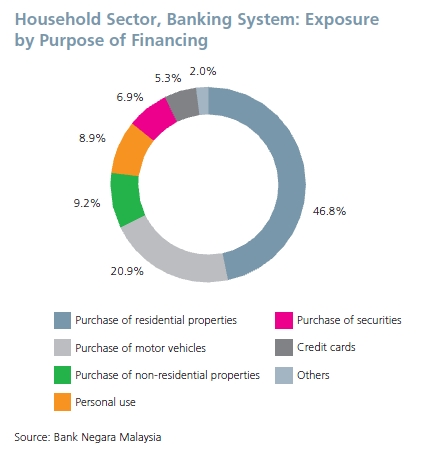
Low interest rates have provided cheap and easy credit and mortgages in Malaysia have grown steadily. Last year, more than half of all household loans–56%–were for buying properties, said Bank Negara’s report. The proportion of them taking multiple loans, furthermore, had risen, “signaling a resumption in demand for housing credit for investment purposes”.

After all, advertisements tout property as a means of achieving wealth and financial freedom. Gurus tell you that if you stretch your loans out, your monthly instalments will come out lower than your rentals (“positive cash flow”), and with enough properties, you may even quit your job!

Recently however, US Federal Reserve chief, Ben Bernanke (the American Tan Sri Zeti) indicated that it might begin tapering off quantitative easing as long as labour markets continue to improve. Although he’s qualified this in several aspects, US interest rates have risen in response, making the dollar and US assets possibly attractive propositions again. Many thus anticipate funds, which had flowed into emerging markets during the financial crisis, to flow back to the US and Europe again.

Manulife Asset Management Services Bhd chief investment officer Jason Chong indeed hinted that there may be a possible mass-exit of foreign investors from the Malaysian bond, money or equity markets.

To stem this capital flight, and also to protect attendant currency falls, India and Indonesia have increased interest rates up to 2%. Bank of Canada has also said that it would “gradually normalize” borrowing costs over time as the slack in the economy disappears and inflation picks up. Brazil, meanwhile, increased rates 0.5% to battle inflation. Here in Malaysia, Standard Chartered made the recent, bold prediction that rates might increase by 0.25% as early as November.

What would be its impact? For me, it means an increase in monthly instalments of RM100 per month. Imagine if I had three mortgages and my instalments went up on all of them? If I were a professional landlord, I could now be cash flow negative with my dreams of financial freedom soured.

Another development to tighten funds would be the Basel III reforms, which require the world’s banks to have enough cash in their vaults and not to lend out too much, to avoid further banking failures. Bank Negara is confident that our banks would have no problem meeting the requirements by 2018, but it would surely mean a constraint on lending.

Already, word on the ground from property sales people goes that some banks are starting to approve only 80% loans for those already servicing another residential property loan.

Potential correction

The figures show noticeable spikes in the Malaysian House Price Index and Index of Units Launched by Price for properties priced above RM1mil from late 2010.

Investors have also started talking about a “potential correction” in the property market, that runaway property prices indicate the top of a property cycle.

“There are risks faced by Malaysian banks in relation to high household debt and a potential correction in the country’s property market, but we think there is a low likelihood of these risks playing out in the next 12 to 18 months,” said credit ratings firm Moody’s in Singapore recently.

The property life cycle, as drawn out by real estate blogger AgentDiary, postulates that Malaysia is at the top of the cycle, with characteristics including transaction price peak and the “property price never drops” rhetoric.

You wouldn’t have known it from the primary market. YTL Land & Development Bhd’s preview of its Fennel project in Sentul East, priced at RM700 per sq ft, sold out two blocks within two days.

Low Yat Group’s Tribeca project on Jalan Imbi has managed to sell at prices ranging from RM1,800 to RM2,400 per sq ft to mainly foreign buyers.

Even at stratospheric prices between RM1,800 to RM2,400 per sq ft, Low Yat Group sold almost half its apartments in its Tribeca project on Jalan Imbi. Arcoris Mont’Kiara by UEM Sunrise Bhd, meanwhile, managed to chart about 90% of sales before its show units debuted to the public. The majority of Tribeca’s units were sold to foreign buyers, from the likes of Indonesia, China and Taiwan, however, while Arcoris’ developers gave significant rebates as sales incentives.

Arcoris Mont’Kiara has seen nearly complete take-up, as packaged with significant incentives.

Property investor Michael Tan reckons that if there were to be a bubble bursting, it could happen within the next couple of years, when many projects bought during the 2010 to 2012 property bull run are completed: “Many were sold on DIBS, so buyers didn’t fork out any cash until completion, not to mention all the attractive rebates. But when the properties come on stream, many will be looking to flip or rent out, and that will be the first test: whether they can find buyers or tenants.”

In terms of housing affordability, the ratio of average house prices in Malaysia, in relation to household income, comes in at about four. In rapidly emerging markets, this is still acceptable, noted valuer Elvin Fernandez has said. However, the figure rises to six, seven or even eight in certain areas of the country, he adds, and this is similar to the ratios that were seen in American houses prices “before they crashed down towards the figure of three during the sub-prime crisis, and three is some kind of gravitational pull for house prices”.

A return to Danaharta?

Mitraland Group chairman Dato’ Johan Ariffin (left) and group CEO Chuah Theong Yee believe that regulation of the property market will benefit the industry in the long run.

Datuk Johan Ariffin, previous senior GM for Pengurusan Danaharta Nasional Bhd’s property division, and now chairman of property developer Mitraland Sdn Bhd, doesn’t believe there will be a return to the last Asian Financial Crisis however. So many loans defaulted then that the government formed Danaharta to buy them out from cash-poor banks.

“No, it’s a different landscape today,” says Johan who also sits on the board of Maybank and Sime Darby Properties. “Then, it was a currency thing, many people had overgeared and businesses had borrowed too much. Today, our banks are much stronger, they have been recapitalised and are very well run compared to 12 years ago. It would take a lot for something to affect the whole system.”

One thing’s for sure, restrictions cool buyer sentiments, such as when the 70% loan cap for the third home and net income rule were announced in 2010 and last year, respectively.

Bank Negara’s regulations may dampen sales but they will weed out speculators, says Dato’ Johan Ariffin, chairman of Mitraland Group which develops projects such as 16 Quartz in Taman Melawati, pictured.

“While it may have taken us three months to hit 60% sales in the past, today it takes us six months to do it, because your buyers come, they are interested but they can’t qualify for a loan then you have to find new buyers,” says Johan.

This means that developers must have enough funds to tie them over a delay in sales. “In our cash flow planning, we already anticipate and make provision for a longer initial sales period. This just means less speculators and more genuine buyers.”


So is everything really under control then, as Bank Negara intimates? Are we just having a controlled slowdown rather than a crash? As a property watcher said over breakfast, you never know. Just like in the late ‘90s, the Asian Financial Crisis took most of us by surprise. We are living in one of history’s largest financial experiments, though, and whether Malaysian property sees a harsh or soft ride towards fundamental values will surely be affected by its outcome… Watch this space.

Base on this article MIEA: No threat of property bubble mention by our "rich" Malaysian Institute of Estate Agents (MIEA) president Siva Shanker.

“We are expecting a nice steady growth of 10% maybe 12% or 13% if we are lucky. The growth won’t echo the phenomenal growth of about 30% like we did previously,” Siva said in a Property Market Outlook: Post GE13 briefing yesterday." so... there's the words "if we are lucky" we (citizen) are the unlucky one as usual~~~ They are asking the estate agents. I'd always say my flowers smell nice when I'm a Florist.

Update article:
http://www.nst.com.my/nation/general/soaring-house-prices-a-major-concern-1.328036